
Coral reefs, often called the rainforests of the sea, face unprecedented threats from climate change, pollution, and human activities. As these vital ecosystems deteriorate at alarming rates, innovative technologies are emerging as powerful allies in conservation efforts.
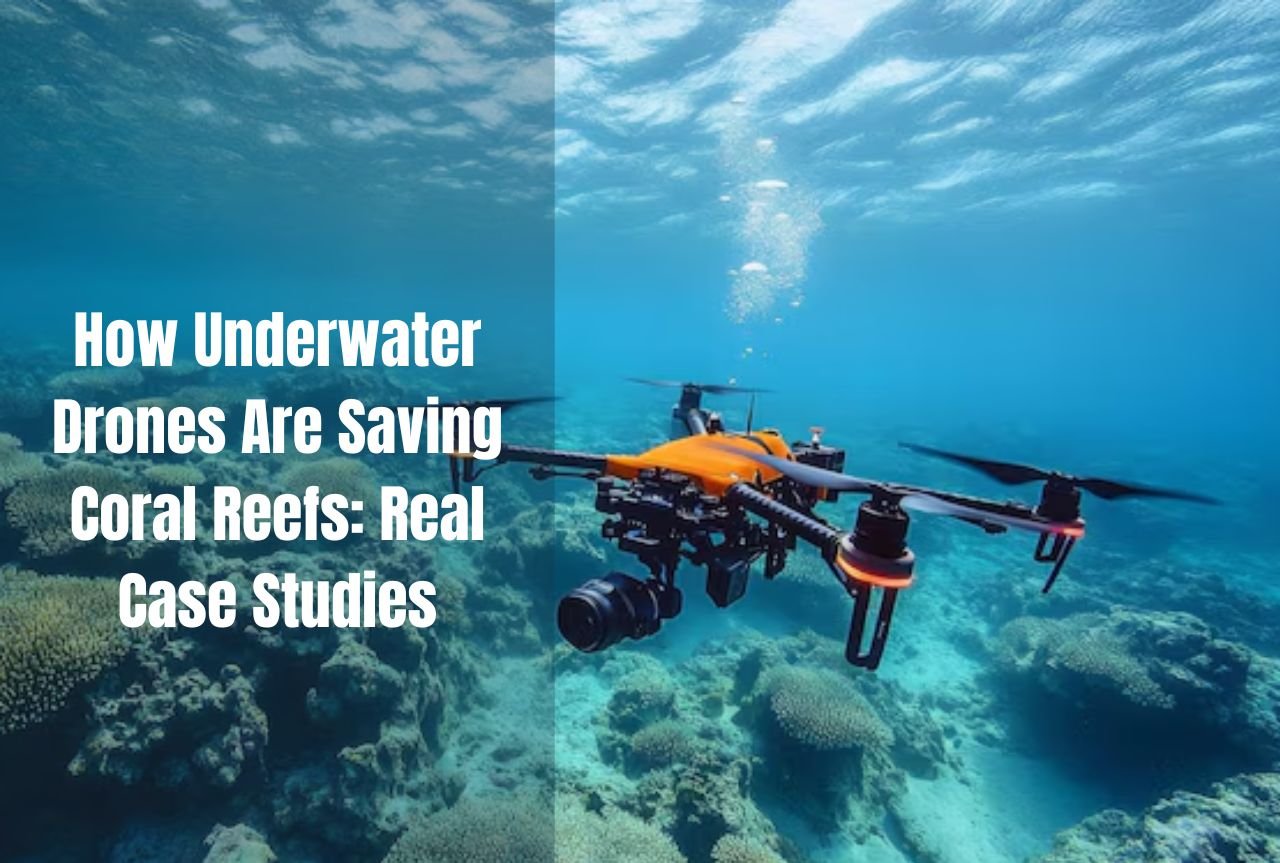
Underwater drones, equipped with advanced imaging capabilities and artificial intelligence, are revolutionizing how scientists monitor, protect, and restore coral reefs worldwide.
The Urgent Need for Technological Solutions
Coral reefs support approximately 25% of all marine species while covering less than 1% of the ocean floor. With over 50% of coral reefs already degraded and predictions suggesting that 90% could disappear by 2050, the race to develop effective conservation tools has never been more critical.
Traditional coral monitoring methods involve divers manually surveying reefs—a time-consuming, expensive process limited by human capabilities. Underwater drones overcome these limitations, accessing depths divers cannot reach safely, covering larger areas more efficiently, and providing consistent data collection even in challenging conditions.
Types of Underwater Drones Revolutionizing Reef Conservation
Remotely Operated Vehicles (ROVs)
ROVs are tethered underwater drones controlled by operators on boats or shore. These versatile tools serve as the workhorses in many reef conservation projects, providing real-time video feeds and often featuring mechanical arms for sample collection or restoration work.
Autonomous Underwater Vehicles (AUVs)
AUVs operate independently, following pre-programmed routes without continuous human control. The Australian Institute of Marine Science has developed specialized AUVs like CoralAUV, designed specifically to navigate intricate reef environments and strong currents while collecting high-definition imagery and environmental data.
Hybrid Underwater Vehicles (HUVs)
These innovative drones combine ROV technology with AUV autonomy, offering the best of both worlds. According to research published in Marine Pollution Bulletin, HUVs can collect vital coral reef data and transmit it to ground stations via IoT connections, making information immediately accessible through websites and mobile applications.
Groundbreaking Case Studies
LarvalBot: Seeding the Great Barrier Reef
One of the most innovative applications of underwater drone technology is the LarvalBot project, developed by researchers at Southern Cross University and the Great Barrier Reef Foundation. This autonomous underwater vehicle works like a mechanical “Johnny Appleseed” for coral reefs.
Scientists collect coral spawn during mass spawning events, rear the larvae in specialized tanks, and then load them into LarvalBot. The drone precisely releases millions of coral larvae onto degraded reef areas, significantly increasing their chances of settlement and survival.
In its first deployment in 2018, LarvalBot successfully distributed over 100,000 coral larvae across selected reef patches, with follow-up studies showing promising increases in coral settlement rates.
eDNA Monitoring with Underwater Drones in Japan
At the Okinawa Institute of Science and Technology, scientists partnered with NTT Communications to pioneer a groundbreaking approach to coral monitoring.
They deployed underwater drones to collect environmental DNA (eDNA) samples from mesophotic coral ecosystems at depths between 35-59 meters—areas typically difficult for human divers to access regularly.
The drones collected water samples approximately 0.5-1 meter above the reef bottom at four monitoring sites in Shigeo Reef near Motobu Peninsula in Okinawa. Analysis of this eDNA successfully identified corals at the genus level, revealing that reefs around the Kerama Islands exhibited different compositions of stony corals depending on location and depth.
This research marks the first time that mesophotic coral genera have been identified using eDNA collected by underwater drones, opening new possibilities for large-scale monitoring without relying on human divers.
Hydrus: AI-Powered Reef Monitoring in Australia
Australian company Advanced Navigation developed Hydrus, a lightweight underwater drone designed specifically for coral monitoring. Weighing under seven kilograms, this compact yet powerful drone can descend to depths of 300 meters and operate within a nine-kilometer range.
Equipped with high-intensity lights, cameras, and an AI-powered image recognition system, Hydrus is being deployed by Australian agencies to survey reefs on Australia’s North West Shelf, including Scott Reef and Ashmore Reef. The drone collects regular data on coral health to monitor reef conditions, investigate climate change impacts, and provide early warning of emerging problems.
Drone Mapping of Intertidal Reefs in Western Australia
Researchers from the University of Western Australia and the Australian Institute of Marine Science conducted pioneering work using drone technology to map intertidal coral reefs of the Rowley Shoals off the Kimberley coast.
These unique reefs, which are exposed to air during low tides, had been underrepresented in traditional monitoring programs due to access challenges.
Using a DJI Phantom 4 Advanced drone launched from a research vessel, the team captured hundreds of high-resolution images of the reef structures during a two-day expedition in October 2018.
The researchers then compared machine learning and AI approaches to analyze the drone-captured imagery, finding that the simplest methods were most accurate in estimating coral cover.
This study demonstrated drones’ potential as a valuable tool for monitoring tide-exposed reefs, which may be particularly vulnerable to climate change impacts, yet difficult to study with conventional methods.
Key Benefits of Underwater Drones in Reef Conservation
Unprecedented Access to Difficult Environments
Underwater drones can access depths beyond safe diving limits (typically 30 meters) and navigate complex reef structures that would be dangerous for human divers. Professor Satoh from the Okinawa Institute of Science and Technology notes that with underwater drones, scientists can extend their research “from the shallowest regions to depths of 60 meters and beyond”.
Efficient Large-Scale Monitoring
Unlike human divers who can only cover limited areas during each dive, underwater drones can systematically survey extensive reef sections. Some initiatives have successfully mapped over 500 square kilometers of reef systems using fleets of specialized underwater drones equipped with high-resolution cameras and advanced sensors.
Non-Invasive Data Collection
Drones minimize human impact on sensitive reef ecosystems while collecting valuable data. They can quietly observe marine life behavior without disruption and gather water samples without physically disturbing coral structures.
Real-Time Monitoring and Early Warning Systems
AI-equipped drones can detect early signs of coral bleaching, disease outbreaks, or other threats, enabling rapid response from conservation teams. The Cleaner Seas organization reports that underwater drones and satellite imaging help in coral reef conservation by detecting threats like coral bleaching and disease early.
Challenges and Limitations
Despite their tremendous potential, underwater drone technologies face several challenges:
Technical Constraints
Battery life limitations, water pressure at depth, and saltwater corrosion remain significant challenges for underwater drone operations. Most current AUVs employed to investigate coral reefs are also costly, though efforts are underway to develop more cost-effective solutions.
Environmental Considerations
Drones must navigate complex underwater currents and avoid physical contact with fragile coral structures. Researchers analyzing challenges encountered by autonomous underwater robotics have identified interactive communication, image processing, and vehicle orientation in dynamic environments as persistent difficulties.
Data Processing Bottlenecks
The enormous amount of imagery and data collected by drones requires substantial computing resources and specialized expertise for analysis. Though AI systems are increasingly helping to automate this process, developing efficient workflows remains challenging.
The Future of Drone-Assisted Reef Conservation
Swarm Technology
Perhaps most promising is the emergence of swarm drone technology, where multiple underwater drones work in coordination to restore larger reef sections simultaneously. These systems use advanced mapping algorithms and real-time communication to ensure precise placement and monitoring of coral fragments.
Integration with Other Technologies
The most effective conservation approaches combine drone technology with other cutting-edge innovations. This includes advanced materials for 3D-printed reef structures, bioremediation agents tailored to specific reef ecosystems, and real-time environmental monitoring networks.
Democratization of Technology
As underwater drone technology becomes more accessible and affordable, conservation organizations worldwide can implement these tools in their reef monitoring and restoration efforts.
Several technology-based conservation initiatives have found success by providing focused training to field practitioners who can then apply new technologies directly to the problem at hand.
Conclusion
Underwater drones represent a transformative force in coral reef conservation, bridging technological innovation with ecological preservation. From the precise deployment of coral larvae by LarvalBot in Australia’s Great Barrier Reef to the pioneering eDNA collection techniques in Okinawa’s mesophotic reefs, these technologies are providing unprecedented insights and capabilities.
While underwater drones alone cannot solve all the challenges facing coral reefs, they significantly enhance our ability to understand, monitor, and restore these crucial ecosystems. As climate change continues to threaten coral reefs worldwide, the continued development and deployment of drone technologies will be instrumental in conservation efforts.